
Salmon Prayers
New Prayer beads in the shop

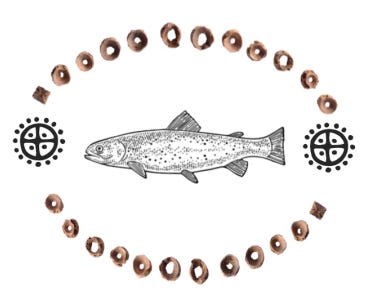
Digital art made with a photo of the actual salmon bones - image / English Heritage
1,100 years ago a man was buried in Lindisfarne, a small island off the north east of land which was once known as Engla land (land of the Angles), which is only accessible at low tide.
While salmon vertebrae have a naturally occurring hole in the centre it had been observed that the bones has been widened, either deliberately to help with threading or perhaps by years of use. What this collection of salmon beads are, is the oldest known set of prayer beads found in the UK.
Similar beads made from modified fish bones have been found at the medieval chapel at Chevington, also in Northumberland. These were made from Atlantic cod, among other fish, and dated from the 13th or 14th century, making this discovery of the salmon bone set at Lindisfarne significantly older.
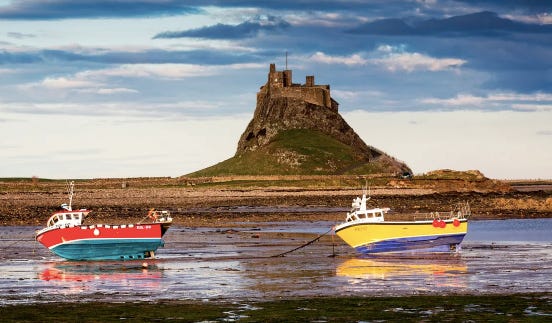
Lindisfarne
As someone who makes prayer beads, my mind reaches back to a time when this man was alive. Lindisfarne has always held a threshold quality, the journey requiring the navigating of tides. I imagine the beads being held between finger and thumb as prayers were uttered in the pre-dawn, the tide still covering the causeway, perhaps leaving the island feeling cut off from the rest of the world.
The beads were made from salmon vertebrae, small hollow bones, once part of a living being. These fish hatch from eggs which would have been laid in local streams. As they develop they adapt to salt water and answer the call of a great migration which will take them thousands of miles out to sea. They live out at sea for almost seven years until they feel the call again, to return to their place of birth.
There is something holy about making prayer beads from a fish whose entire life is a call of pilgrimage. I wonder who gathered the bones and cleaned them? Did they come from a dead salmon at the end of their journey, or perhaps the bones were gifted?
As someone who makes prayer beads, I like to consider when he might have used the beads, reaching for them for comfort but also in times of fear, perhaps when someone shouted in terror that they could see Viking longboats approaching.
There is something holy about making prayer beads from a fish whose entire life is a call of pilgrimage
How did this person engage with the land around them. Did they honor the great journey of the salmon. Living in a costal area, you rely and survive on fish. These people were shaped by the land around them, the ebb and flow of the tide, and the movement of shoals of fish.
When I string beads using stone or bone, wood or shell, much like doll making, I feel part of a long linage, of people who made these sacred tools.
These beads have had a long journey of pilgrimage, from stream to ocean, and then returning home. Bone gathered, held in prayer, from burial to excavation - a long story of salmon prayer.

Click here to check my new prayer beads in the Shop
Links
Amazing Artefacts: Britain’s earliest medieval prayer beads are made from fish bone
I love your story of the salmon prayer beads. I live in a land of salmon on the westcoast of Canada. Most of the salmon streams around this part of Vancouver had been buried until recently when groups of Streamkeepers have been daylighting steams and seeding them with salmon fry. One stream close to me had 90 salmon come back last year! I hadn't heard of making beads out of their vertebrae - need to do some research. Thanks.
i love picturing the salmon beads